Porsche Whale Tail: The Complete History and Identification Guide
Few automotive design elements are as instantly recognizable as the Porsche whale tail. This massive, vented rear spoiler has become synonymous with Porsche performance – a bold statement that transformed street-legal sports cars into pavement-chomping beasts. But where did it come from, how did it almost get banned, and what’s the difference between all those tail variants?
What Is a Whale Tail Spoiler?
Before diving into history, let’s understand what spoilers actually do. A spoiler “spoils” the smooth, laminar flow of air over a car’s body as it moves. Picture water from a tap curving around a dish – that’s how air flows over a car at speed. This creates drag, which slows the vehicle.
Spoilers disrupt this airflow in a controlled way, reducing drag while adding downforce. The result: higher speeds and better high-speed stability. Have you ever stuck your hand out a car window? With your palm facing down, your hand stays relatively stable. Turn it vertical, and immediately the drag force pushes your arm backward. That’s the force spoilers are designed to manage.
The Porsche whale tail is a very specific type of spoiler – large, vented, and substantial. Unlike subtle modern aerodynamic elements, the whale tail dominates the rear of the car, sitting prominently above the engine bay as a stand-alone performance mechanism.
The Whale Tail Makes Its Debut
The whale tail first appeared on the 1974 Porsche 911 Carrera RS 3.0 as an evolution of the earlier “duck tail” spoiler. While the duck tail had a hatch-like appearance that extended the engine cover, the whale tail was larger, flatter, and featured an upturned trailing edge – resembling a whale’s tail emerging from the ocean.
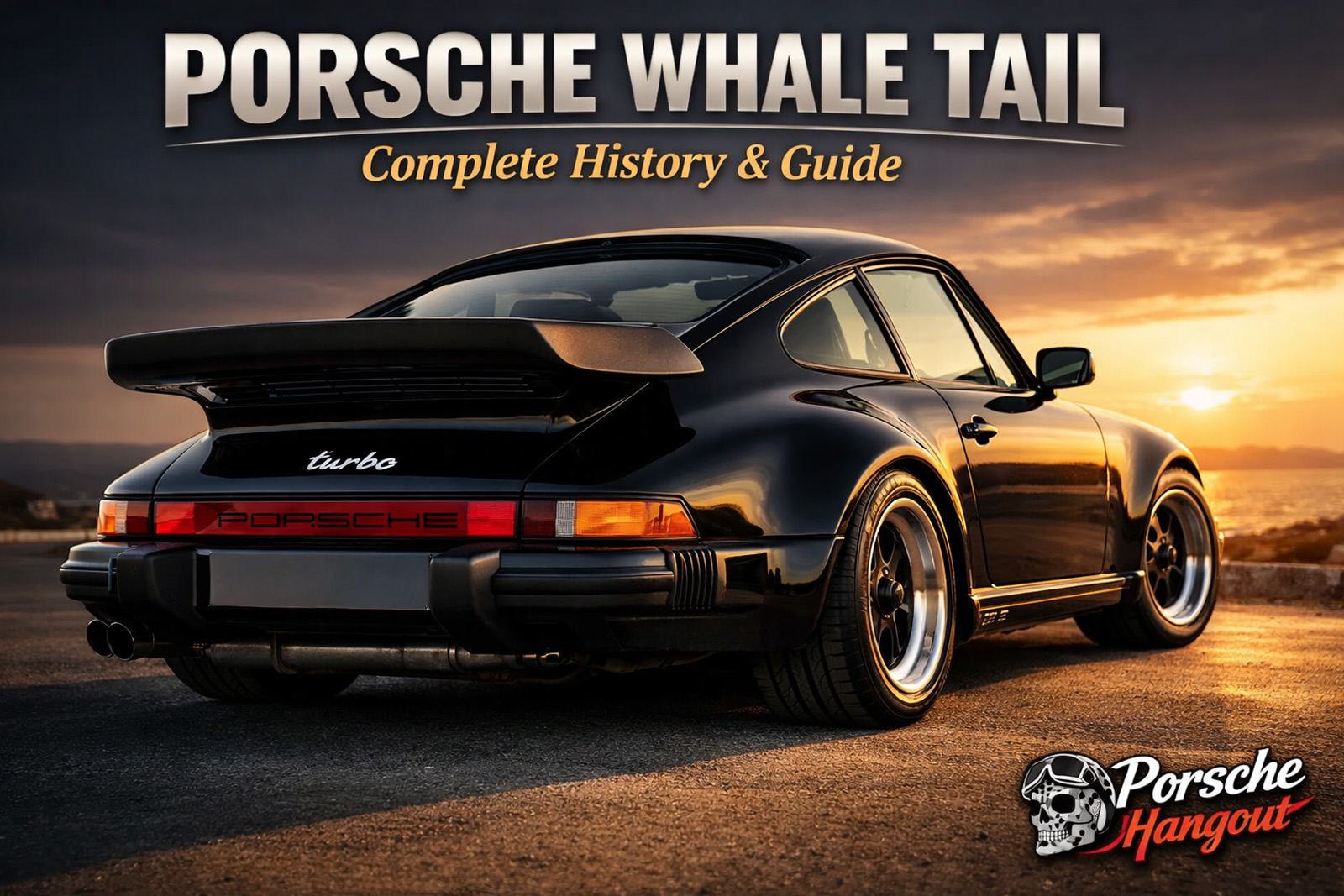
But the whale tail’s most famous application came in 1975 with the legendary 930 Turbo. Porsche engineers knew this turbocharged beast demanded something different. The 930’s turbocharger technology derived from the 917 that won the 24 Hours of Le Mans in 1970 and 1971 – the same 917 made famous by Steve McQueen’s film Le Mans.
The whale tail was designed to build on that racing nostalgia. Porsche brought back the heart and soul of their legendary racing history, reinterpreting those prominent racing spoilers with modern flair for the street. It worked: the whale tail became the visual signature of Porsche performance.
Duck Tail vs. Whale Tail vs. Turbo Tail: A Spotter’s Guide
Porsche used several distinct tail variations through the years. Here’s how to tell them apart:
The Duck Tail (1972-1973)
The original rear spoiler, introduced on the 1973 Carrera RS 2.7. It’s a relatively subtle extension of the engine cover with an upward lip – like a duck’s tail feathers. Clean, understated, and now incredibly valuable on original RS models.
The Whale Tail – Version 1 (1974)
First seen on the 911 Carrera RS 3.0. This featured a recessed grille that followed the line of the engine cover. Larger and more aggressive than the duck tail, but still integrated into the overall rear design.
The Whale Tail – Version 2 (1975-1977)
The iconic 930 Turbo version. Here, the grille was set into the spoiler itself, creating that distinctive vented appearance. This is the whale tail most people picture – bold, functional, and unmistakably Porsche.
The Carrera Tail (1984+)
The final evolution, introduced on the 1984 911 Carrera. This refined the whale tail design with cleaner lines while maintaining the substantial presence that defined the look.
The Tea Tray
Not technically a whale tail, but worth mentioning: the small, flat spoiler sometimes called the “tea tray” appeared on various 911 variants as a more subtle aerodynamic aid.
The Court Case That Almost Killed the Whale Tail
Here’s a story most Porsche fans don’t know: German regulators almost banned the whale tail before it ever reached production.
When Porsche submitted the 930 Turbo for approval in 1975, German automotive authorities put the brakes on the design. Their concern? Safety – specifically, the safety of bicyclists.
The logic went like this: if a Porsche was stopped or moving slowly and a cyclist hit it from behind, the rider might be injured by the protruding spoiler. It sounds absurd today, but it was a genuine regulatory roadblock.
Porsche initially added a rubber edge to the spoiler to reduce potential injury – but regulators still weren’t satisfied. Faced with the prospect of launching their revolutionary 911 Turbo without its signature feature, Porsche did something remarkable: they sued the Federal Republic of Germany.
In court, Porsche’s defense team argued that the whale tail didn’t make the 911 Turbo more dangerous than other approved features – like roof racks, bike racks, and ski racks that protruded from vehicles without regulatory complaint.
The court agreed. Porsche won, and the whale tail was approved for production. If the lawsuit had failed, one of the most iconic design elements in automotive history might never have existed.
Which Porsche Models Featured the Whale Tail?
Factory Whale Tail Models:
- 1974 Porsche 911 Carrera RS 3.0
- 1975-1989 Porsche 930 Turbo (various iterations)
- 1984-1989 Porsche 911 Carrera (with Carrera tail option)
- 1989 Porsche 911 Speedster (optional)
Modern Interpretations:
The classic fixed whale tail largely disappeared after 1989 when the 964 introduced electronically retractable spoilers. This basic principle remains in use on the latest 992 generation – the spoiler hides flush with the body and deploys automatically at speed.
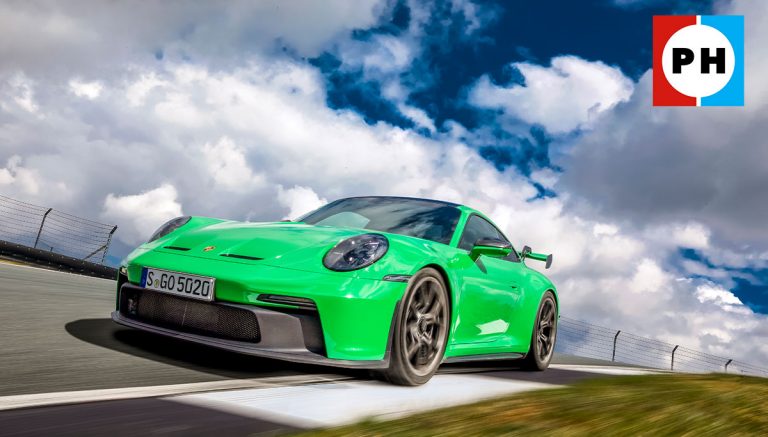
However, the whale tail’s influence lives on. The current 911 GT3 features a massive rear wing that echoes the whale tail’s aggressive stance, while the 911 Turbo S uses an active rear spoiler system that pays homage to its turbocharged ancestors.
Aftermarket Whale Tails
For owners who want the classic whale tail look on a 911 that didn’t come with one, aftermarket options abound. Companies like Suncoast Porsche Parts offer reproduction whale tail spoilers that can be fitted to various 911 generations.
Original whale tails have become collectible in their own right. In February 2024, an authentic whale tail spoiler sold on Bring a Trailer for $1,111 – without the car attached.
Why the Whale Tail Endures
More than five decades after its introduction, the Porsche whale tail remains one of the most recognizable design elements in automotive history. It transformed the 911 from a beautiful sports car into a visual statement of performance intent.
Whether you find it aesthetically perfect or slightly excessive, there’s no denying the whale tail’s impact. It took Porsche’s racing heritage and made it street legal – quite literally, after winning in court. Every modern 911 rear spoiler, whether fixed or retractable, owes something to that original vented wing that emerged in 1974.
And that’s a tail worth remembering.
🔍 Decode Your Porsche VIN
Want to know exactly what your 911 came with from the factory? Use our free Porsche VIN Decoder to reveal your car’s full specs and production details.